
🗂️ AI Knowledge Deck: Card Box Learning & Spaced Repetition
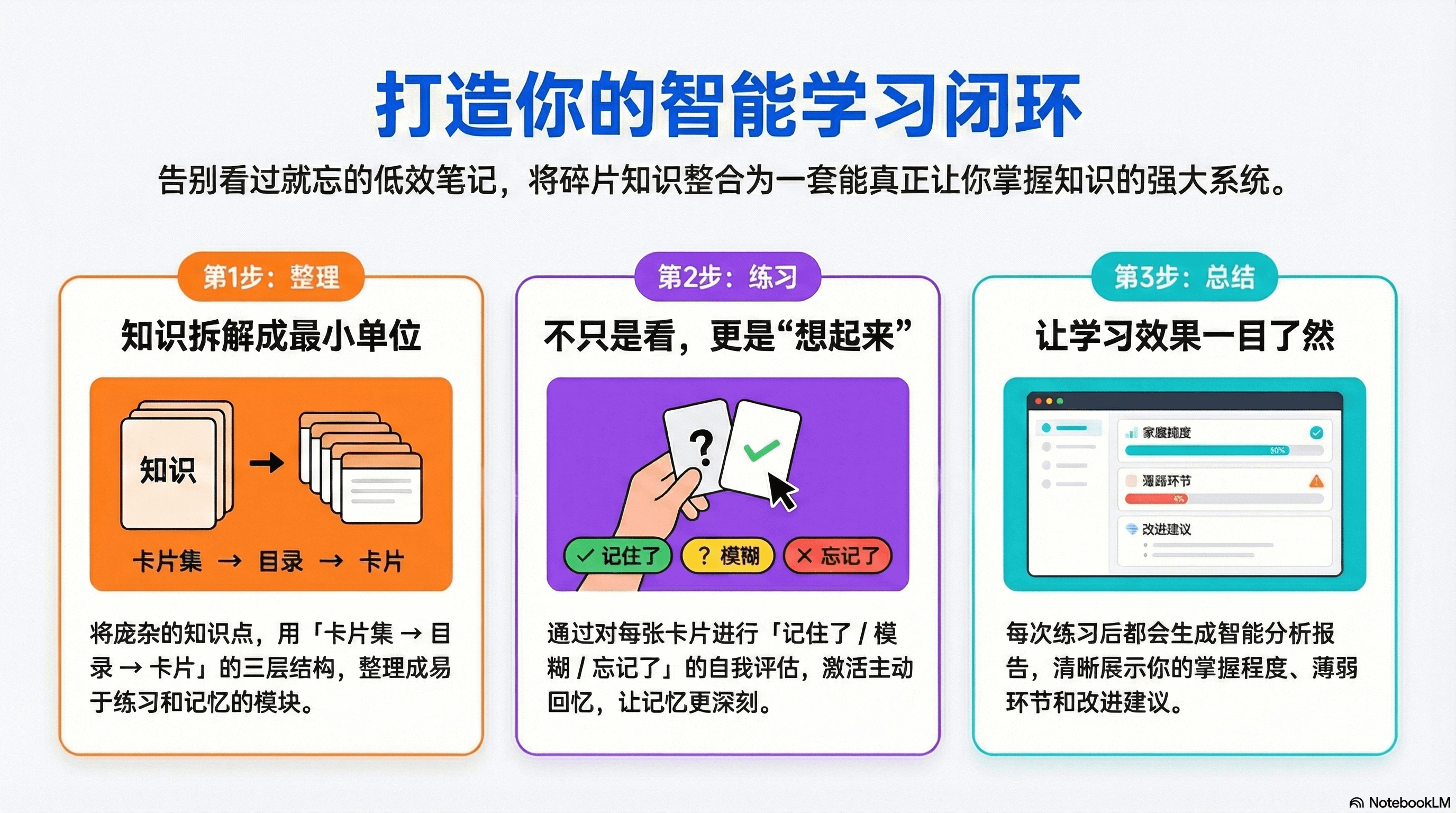
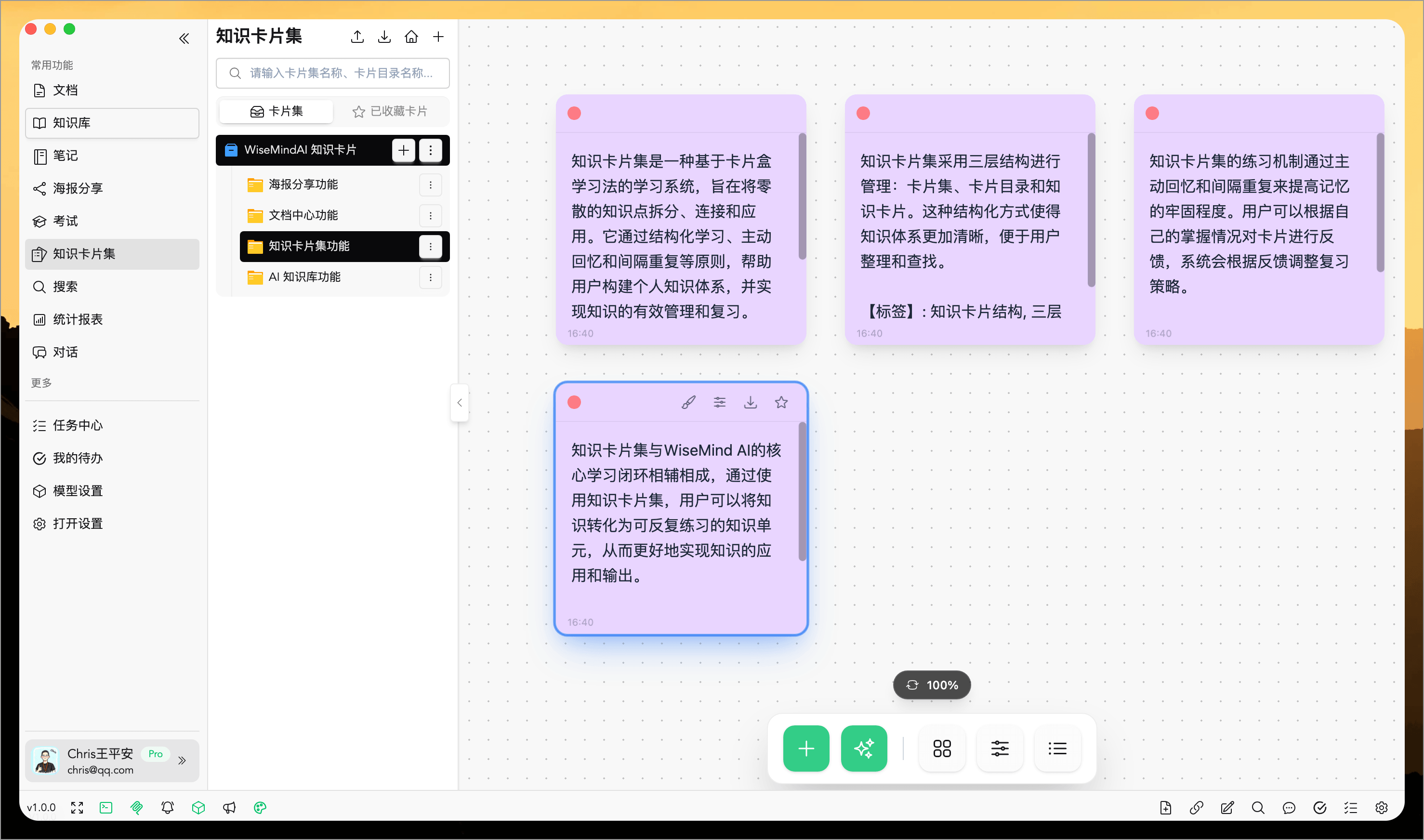
Knowledge Decks are an AI-powered learning system designed by WiseMindAI based on the Card Box Method. It organizes documents, notes, highlighted content, images, and AI conversations into practice-ready knowledge cards, enabling you to truly achieve: Organize → Practice → Summarize.
It is not just a "card tool," but a long-term learning system that can be observed, tracked, and optimized, suitable for knowledge management, exam review, thesis reading recap, technical documentation study, and long-term material accumulation.
Ideal Scenarios: Student Exam Prep | Engineer Document/Paper Review | Creator Asset Library | Lifelong Learner Building "Knowledge Maps"
🌈 Why Create "Knowledge Decks"?
Many people experience this:
- Notes accumulate, but one pass is rarely enough to remember
- Key points lie buried in lengthy documents or notes; they are not granular enough for effective review
- You don't know how much you truly understand—what was just "read" versus what can be applied
- Related topics on the same subject are scattered across different documents, making cross-document organization tedious
The result is: Knowledge exists but isn't organized. It's organized but not practiced. Practiced but without feedback.
In learning science, empirically effective methods share three common characteristics:
- Structured Learning: Knowledge has a clear structure rather than being amorphous
- Active Recall: Not just "understanding," but "retrieving"
- Spaced Repetition: Reviewing at optimal intervals instead of cramming last-minute
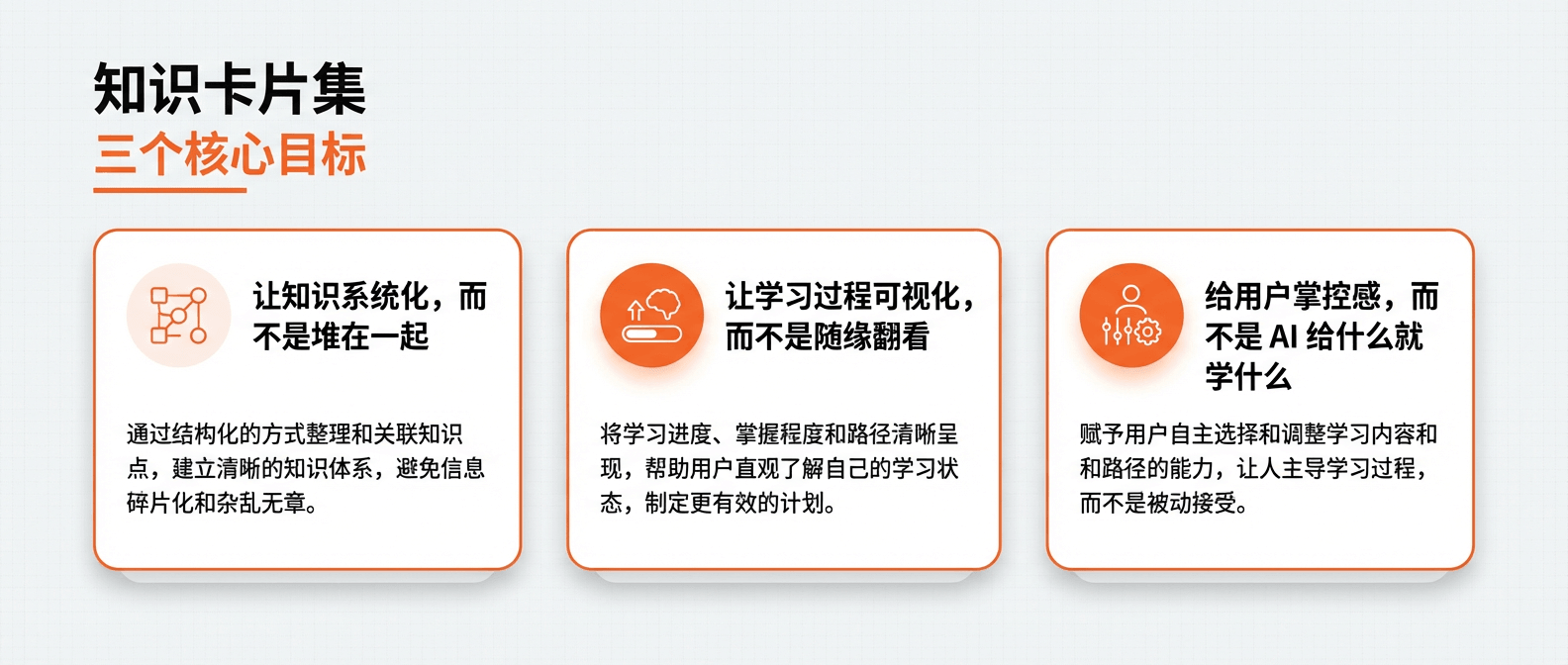
Based on these principles, WiseMind AI designed the "Knowledge Deck" with the following goals:
- Systematize Knowledge: Build your personal knowledge system using a three-layer structure (Deck → Card Directory → Card)
- Visualize Learning Progress: Rely on practice feedback ("Remembered / Fuzzy / Forgotten") rather than random browsing
- Reclaim Your Pacing: You decide what to learn, how to learn it, and the scope/order of your study
📚 What is a Knowledge Deck?
Knowledge Decks = A card box tool that transforms fragmented knowledge into a structured learning system. It revolves around a closed loop: Organize → Practice → Summarize.
1. Organizing Knowledge Cards: Breaking Down Knowledge into the Smallest Unit of Practice
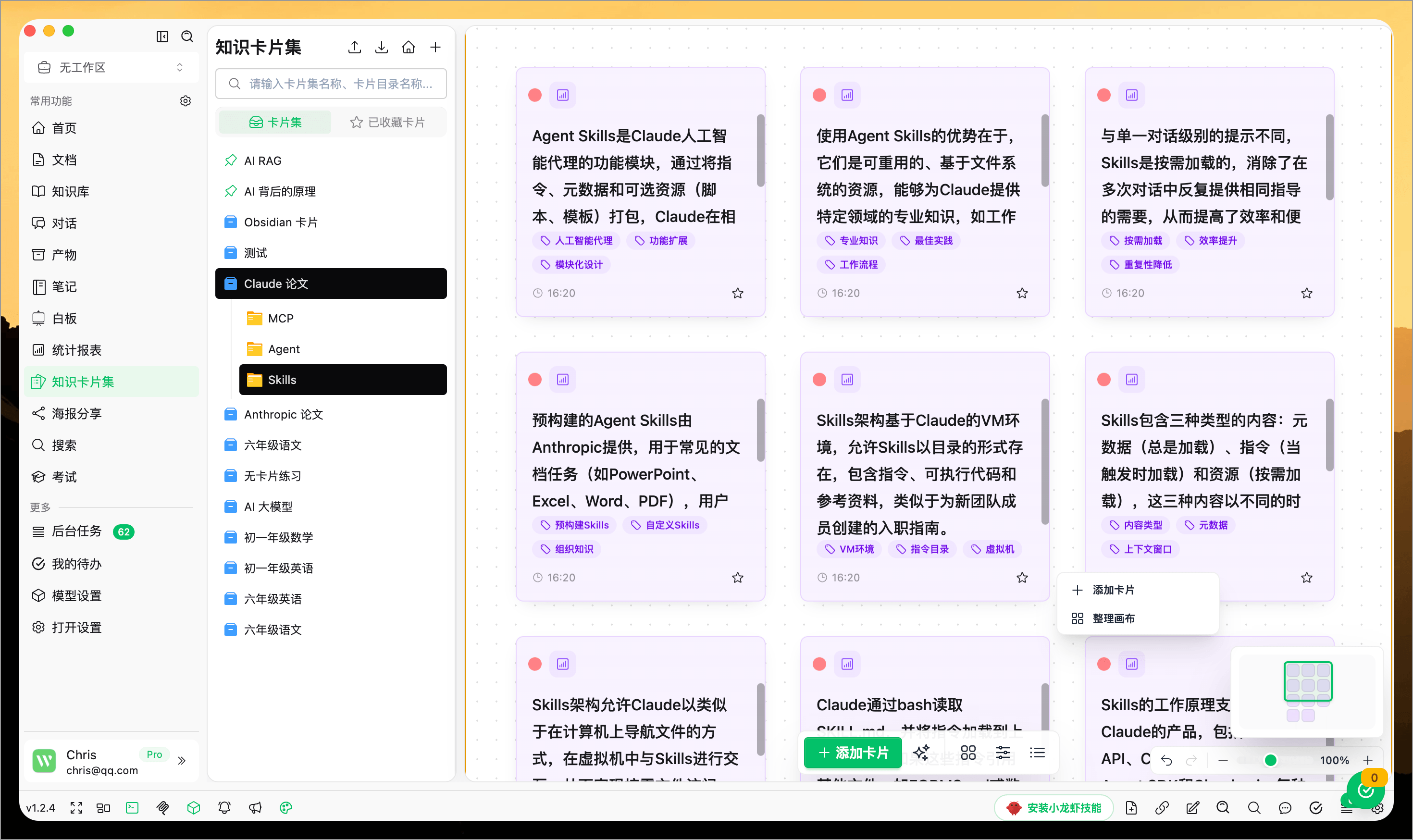
In WiseMind AI, knowledge cards are managed in three layers:
- Deck: A major topic (e.g., "6th Grade Chinese," "AI Fundamentals," "Large Model Application Practices")
- Card Directory: Sub-categories under a theme (e.g., "AI Training," "AI Inference," "AGI," "Prompt Engineering")
- Knowledge Card: The smallest unit of knowledge that is learnable and practice-ready. Sources include: document highlights, web highlights, AI-generated cards, AI conversation content, image analysis, or manually inputted points
On the card canvas, you can:
- Directly input a point to ask AI for an automatically generated related knowledge card
- Convert important reading content into cards with one click and add them to relevant decks
- Attach images to cards (saving infographics, screenshots, or mixed-media resources)
- Export deck configurations while retaining text, images, etc., as needed
- Create different decks for various themes to gradually build your own Knowledge Map
Tip: Compared to full-page notes, learning with the unit of a knowledge card is better suited for practice and review.
2. Practicing with Knowledge Cards: Assessing Your True Mastery
Having cards is only the first step; you need a practice mechanism to determine your level of mastery.
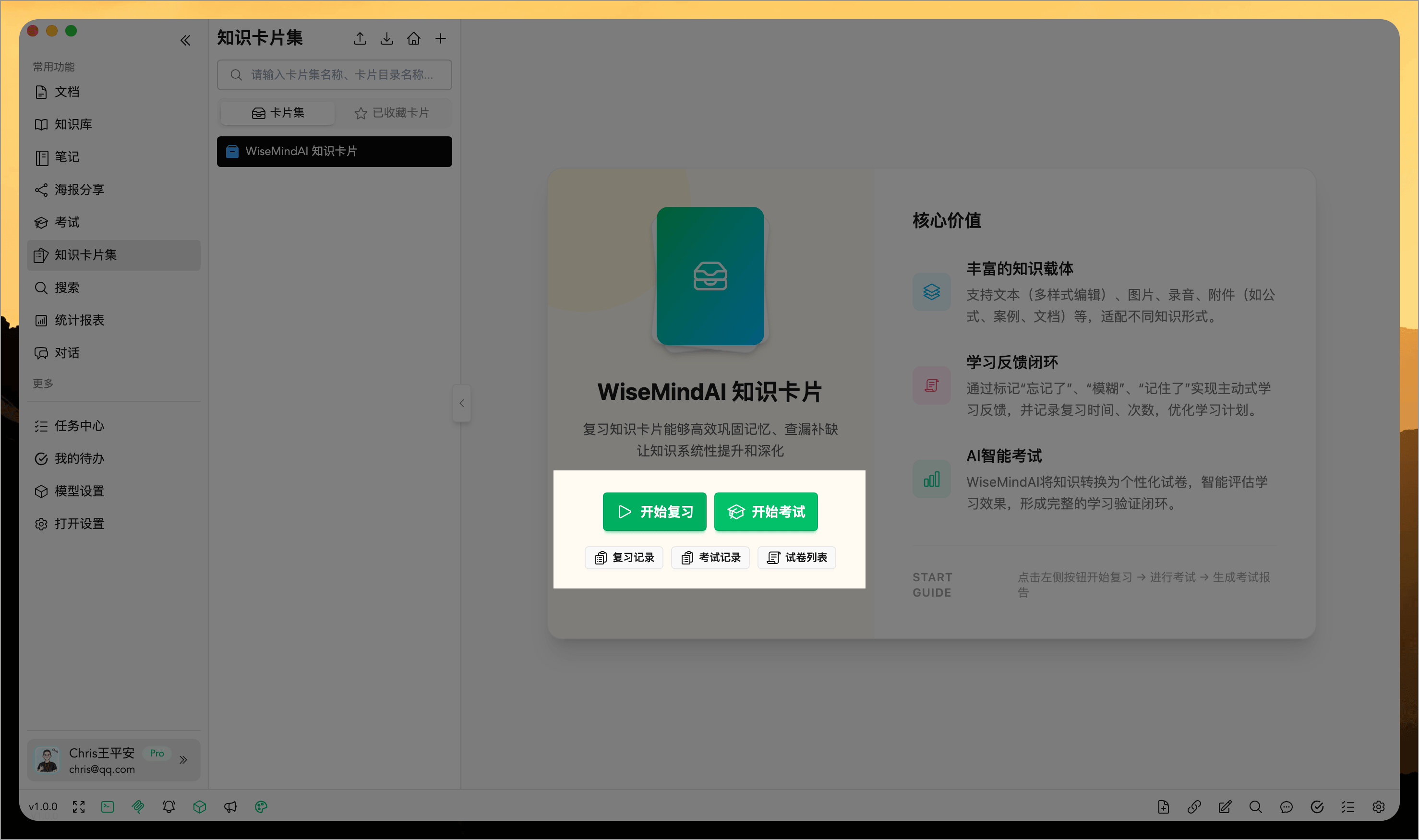
In "Knowledge Decks," you can choose between:
- Quick Practice: Start practicing the current deck using default recommendations
- Custom Practice:
- Define practice order (e.g., Random / By Directory / By Creation Date)
- Control whether answers are shown only after a forced response attempt
- Select subsets by directory scope (ideal for periodic reviews)
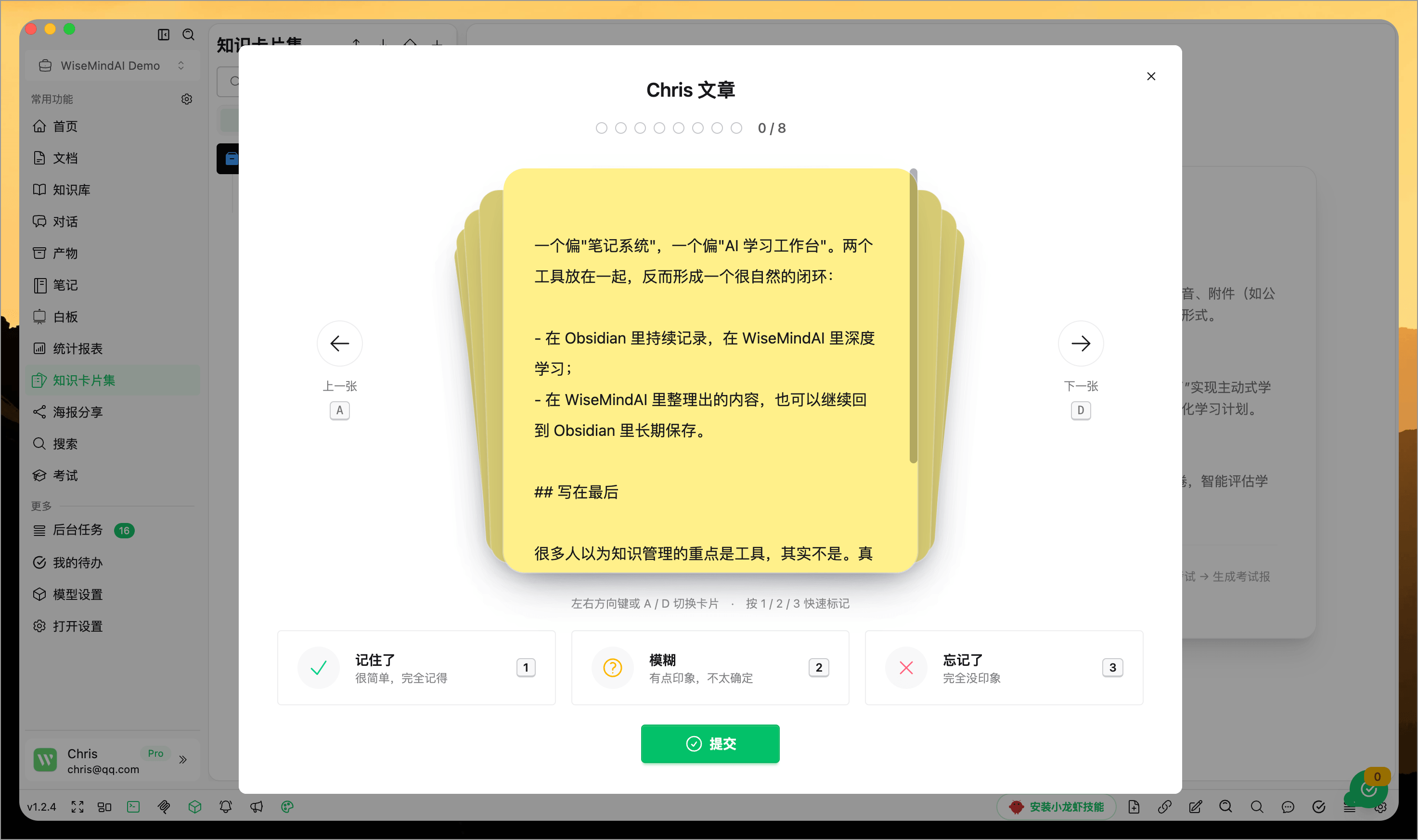
On each card, you provide feedback based on your actual understanding:
- Remembered
- Fuzzy
- Forgotten
This feedback serves as the foundation for future practice, helping the system determine which cards need priority review next.
3. Practice Summaries
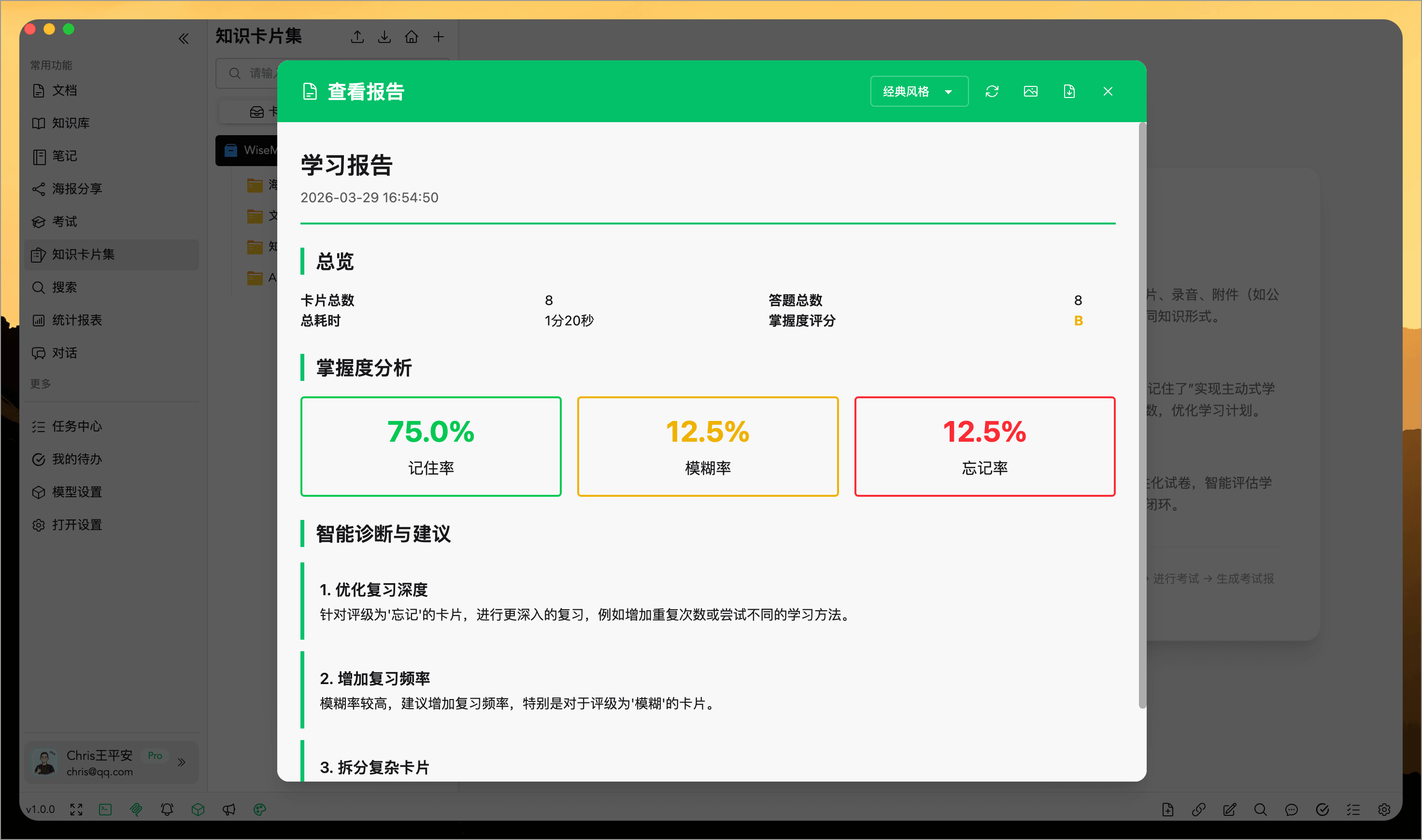
After each practice session, WiseMind AI automatically generates a Performance Report containing:
- Basic Data:
- Session duration
- Number of cards practiced
- Overall mastery score
- Average response time
- Mastery Analysis:
- Recall rate / Fuzzy rate / Forgotten rate
- Performance breakdown by directory (better vs. weaker areas)
- AI Diagnosis & Recommendations:
- What were the primary issues exposed in this session?
- Which gaps are due to lack of knowledge, and which stem from expression or understanding issues?
- How should your learning strategy be adjusted moving forward?
Instead of just looking at "Right/Wrong," let AI help you answer: "Why did I get it wrong? What's the next step?"
You can also export reports as images or PDFs for review, sharing, or documenting your learning journey.
🎲 Why Practice Deliberately?
In the design of "Knowledge Decks," the core of practice is Active Recall.
You aren't "reading" knowledge; you are retrieving answers from your mind. Compared to passive reading, this approach significantly strengthens memory retention.
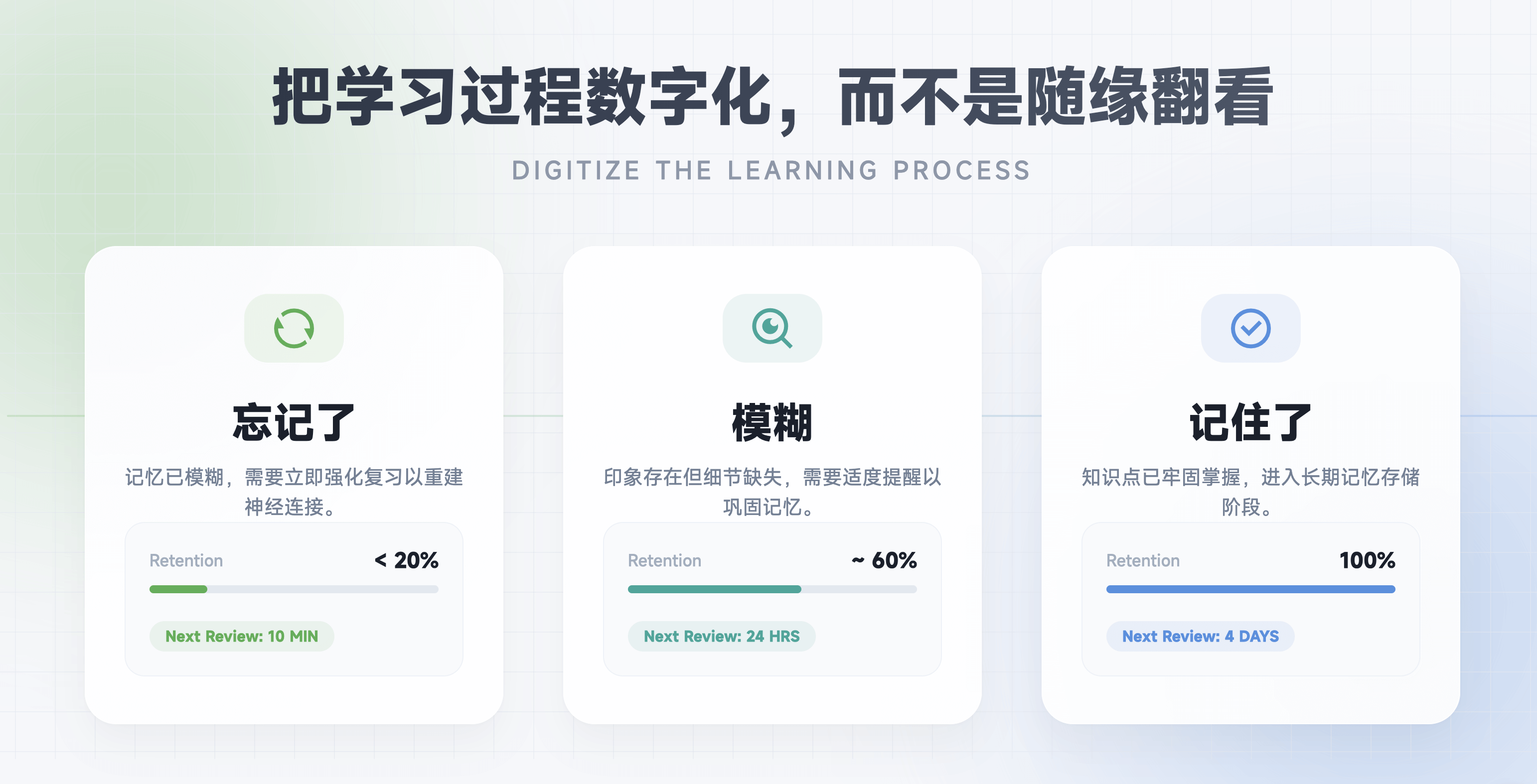
When you click a card:
- Forgot: The concept has faded from short-term memory. The system will prioritize reviewing it over the next few days.
- Vague: You have an impression but lack clarity on details. The system will remind you at a medium frequency to reinforce your understanding.
- Remembered: Your grasp is solid, so the interval for the next review can be extended.
This relies on a lightweight "spaced repetition" logic:
It doesn't aim to "memorize an entire book by rote," but rather reawakens key concepts at optimal moments.
It's more effective than repeatedly flipping through notes and better controlled than never reviewing again.
📉 Why do you need reports and statistics?
To make learning concrete rather than vague, the Knowledge Card Set includes two essential modules:
- Practice Report: A clear snapshot of every session.
- My Statistics: An overview of long-term learning trends.
1. Practice Report: Know how well this time you did it
After each practice ends, you can see:
- Basic Data: Time spent, number of cards, average duration per card, and score.
- Mastery Analysis: Recall rate / Vague rate / Forgot rate.
- Intelligent Diagnosis & Suggestions: What problems were exposed in this session? How should the next review be structured?
This ensures you aren't just "finishing a practice," but truly understanding what effect it produced.
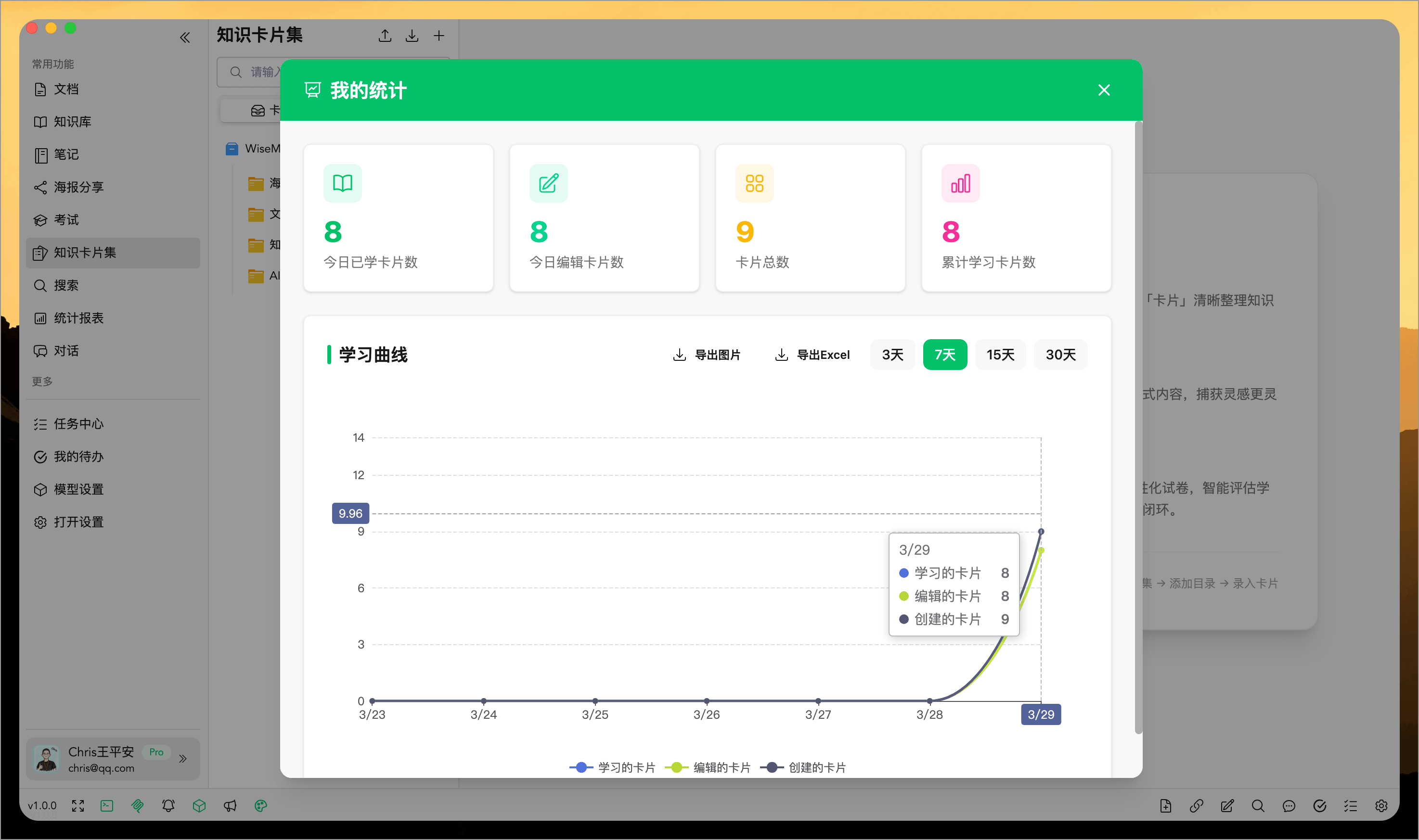
2. My Statistics: See your long-term trends
In the Statistics section, you can view:
- Number of cards learned today
- Number of cards edited today
- Cumulative number of cards learned
- Total card count
Plus a key Learning Curve Chart, including:
- Daily cards learned
- Daily cards edited
- Daily new cards created
These data points help answer questions like:
- Am I learning consistently rather than sporadically?
- Is my total knowledge base expanding steadily?
- Which days had the highest efficiency, and what was the corresponding schedule or environment?
3. Report + Statistics = A Sustainable Learning Loop
Connecting all previous modules creates this loop:
- Report: Snapshot of practice quality
- Statistics: Trend in long-term behavior
- Practice Feedback: Derives "what to learn next time"
- Card System: Clearly presents "where your knowledge structure stands"
In other words, the Knowledge Card Set helps you transition from:
"I finished reading"
to
"I know what I learned, how well I learned it, and exactly what to do next."
👥 Who is suitable for using Knowledge Card Sets?
The Knowledge Card Set isn't about "stacking features"; it solves real learning problems. It's especially ideal for:
- Students:
- Thick textbooks can be broken down into manageable, individual cards.
- Before every exam, you can systematically review within the set instead of frantically flipping through piles of notes.
- Engineers / Practitioners:
- Technical docs, standards, frameworks, and papers can all be converted to cards.
- Even during busy periods, you can use fragmented time for a few card practices without forgetting what was learned.
- Creators / Researchers:
- Articles, books, papers, and materials read can be distilled into cards.
- Gradually building your own "long-term asset library" to serve writing and output needs.
For Chris personally, the Knowledge Card Set is used to reorganize:
- AI-related concepts
- Various technical roadmaps
- Paper frameworks and methodologies
into a clear knowledge map.
🔁 Relationship with WiseMind AI Core Loop
WiseMind AI has always emphasized its core learning loop as: Import Knowledge → Analyze Knowledge → Use Knowledge → Output Knowledge. Within this process, the Knowledge Card Set plays the most critical role:
- It is the handle for "Using Knowledge"
- It ensures you move from "I read it and understood it" to truly reaching "Being able to use it"
Through the card set, you can:
- Turn imported/analyzed content into reusable knowledge units
- Identify your weak points at a lower cost through practice and reports
- Combine notes with cards to build a long-term, evolving personal knowledge system
❓ FAQ
Q: How is the Knowledge Card Set different from regular notes?
Regular notes are better for recording content. The Knowledge Card Set is designed for practicing and reviewing. It breaks down knowledge into small, answerable, taggable, and statuable cards so you know exactly what you've remembered or forgotten.
Q: What learning scenarios suit the Knowledge Card Set?
It suits students preparing for exams, reading papers, studying technical documentation, course reviews, organizing a knowledge base, and accumulating creator assets. Any content requiring long-term memory, repeated extraction, and continuous review fits here.
Q: What can AI do in the Knowledge Card Set?
AI can generate knowledge cards based on documents, highlighted text, or user input topics. It can also produce reports after practice to help identify weak points and suggest next steps for review.
Q: Can I save images in the Knowledge Card Set?
Yes. Newer card formats support adding images, suitable for saving infographics, screenshots, illustrated notes, or other visual materials.
Q: Can highlighted text be saved directly into the Knowledge Card Set?
Yes. When reading documents or web pages, you can select important content and save it to the set via the selection menu, ideal for organizing while reading.